
Now entering its third year, the Greater Johnstown School District’s AgriQuest Farm-to-School initiative is building on its success by continuing to provide meaningful agriculture and food education experiences to students from prekindergarten through 12th grade.
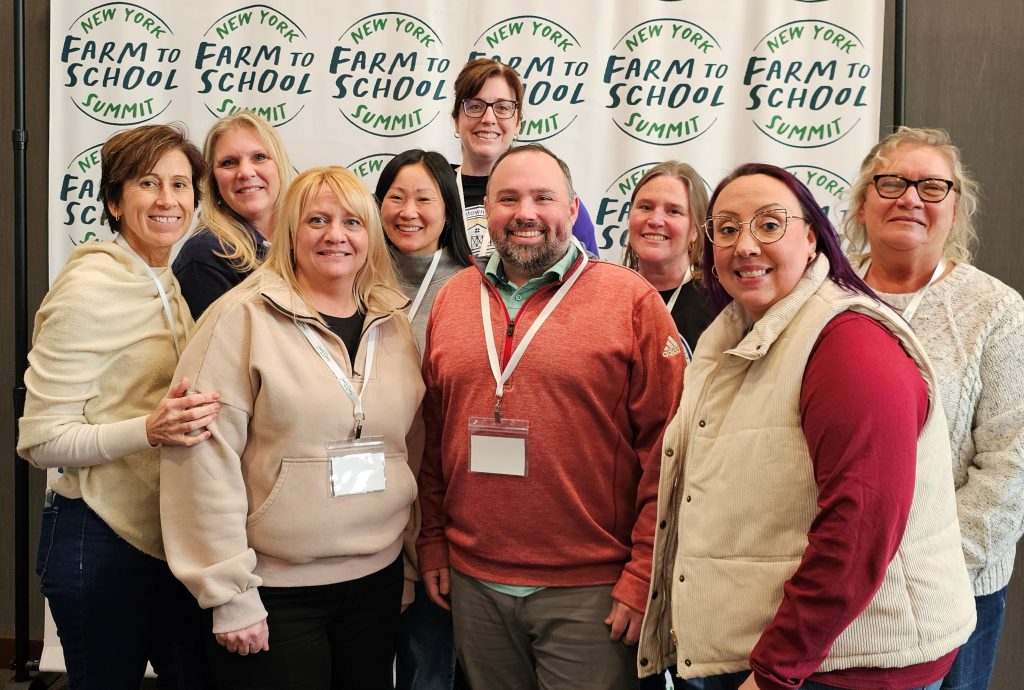
What began in 2023 with simple efforts to introduce New York products into schools has evolved into a districtwide initiative that helps students explore nutrition, agriculture, science, sustainability, and career opportunities, while strengthening connections to their community.
“At Johnstown, we’re bringing agriculture, nutrition and hands-on learning into our classrooms while bringing the whole community to the table,” said Superintendent of Schools Alicia D. Koster. “These experiences help students connect what they learn in school to the world around them and inspire them to explore new opportunities for the future.”


The AgriQuest breakthrough
AgriQuest grew from a desire to incorporate more regional items into school menus while providing experiential learning through agricultural field trips and classroom tastings of locally-sourced maple syrup, cheese, fruits and milk.
As interest and enthusiasm for the program grew, educators realized food as a powerful gateway to multiple subjects. Lessons quickly broadened to include environmental stewardship, health, science, nutrition and cooking – giving students tangible ways to engage with real-world concepts.
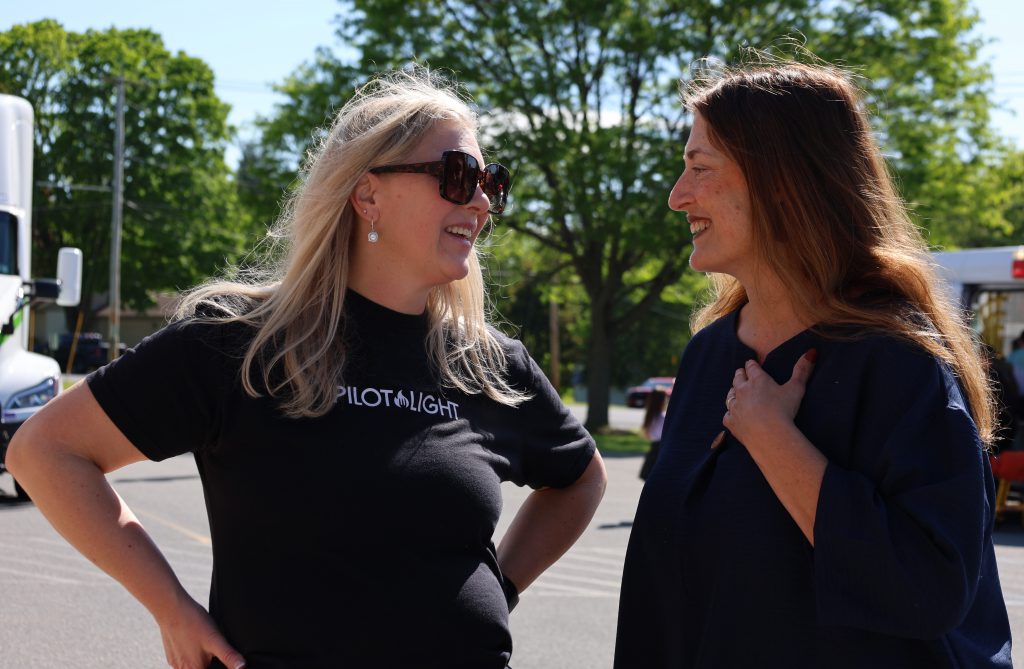
Recognizing this momentum, Superintendent Koster stepped in to maximize the program’s potential by tapping longtime Johnstown elementary teacher Ellen Roehl to serve as the AgriQuest Department Leader. Tasked with scaling the curriculum across all grade levels, she is supported in this role by two building-level coordinators in each school to champion the program’s daily success.
Pilot Light: National inspiration, local impact
One key strategy that Roehl uses to integrate the AgriQuest curriculum is her partnership with Pilot Light, a non-profit organization that helps schools use food and cooking to engage students in academic learning and life skills development.
Through the Pilot Light fellowship, teachers gain access to professional development, educational resources, stipends and a network of innovative educators across the country.
Roehl spent the 2025-2026 school year as a Pilot Light fellow and leveraged resources to introduce new ideas at Johnstown. She strengthened local community and vendor partnerships and expanded learning opportunities throughout the District.
“Cooking is about experimenting, tasting and having fun. The resources I’m bringing forward from Pilot Light are enhancing the AgriQuest program and giving students a deeper understanding of where their food comes from, how it was produced and why it matters. Every child deserves to understand and shape their own food story,” Roehl said.
When discussing food, Roehl encourages students to consider allergies and dietary needs. By sharing that she cannot eat artificial food dyes, she sparked curiosity and empathy among students. During a chef demonstration at Warren Street, Chef Nia McGuire showed students how ingredients can be adapted, describing how her own food allergies inspired her culinary career. Students then decorated cupcakes with frosting naturally colored with beets, reinforcing the importance of understanding what goes into food and how recipes can be modified to meet preferences and restrictions.
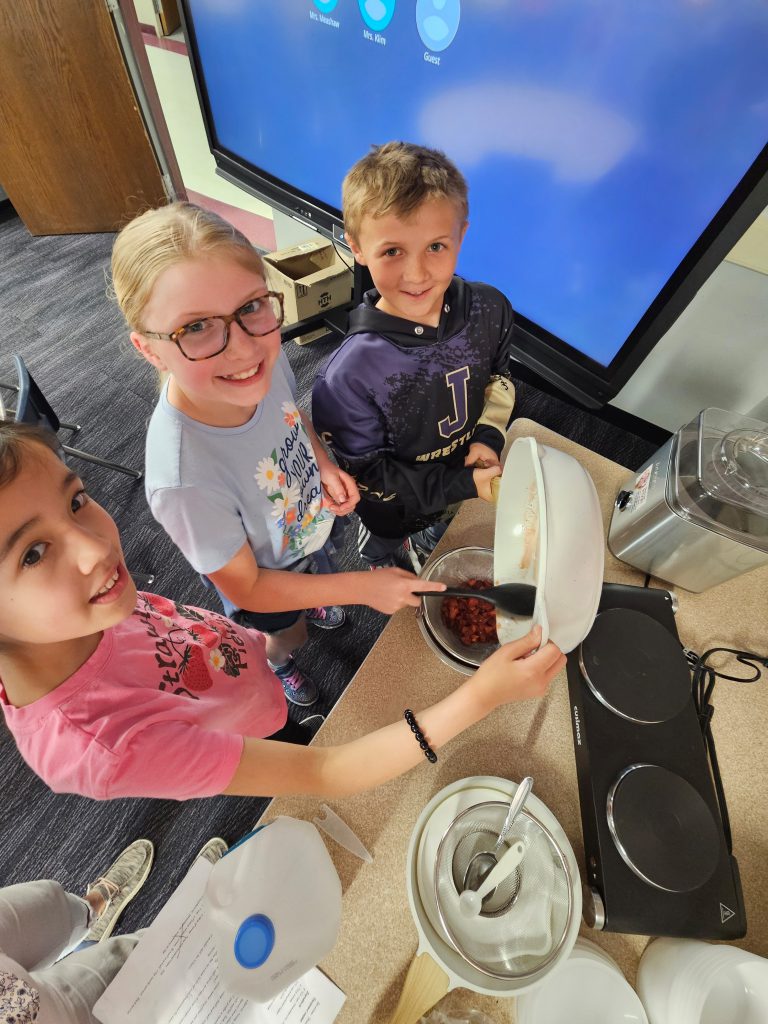
Under Roehl’s guidance, students are doing more than just tasting local foods – they are learning about the people, processes, and systems that bring food from farms to tables.
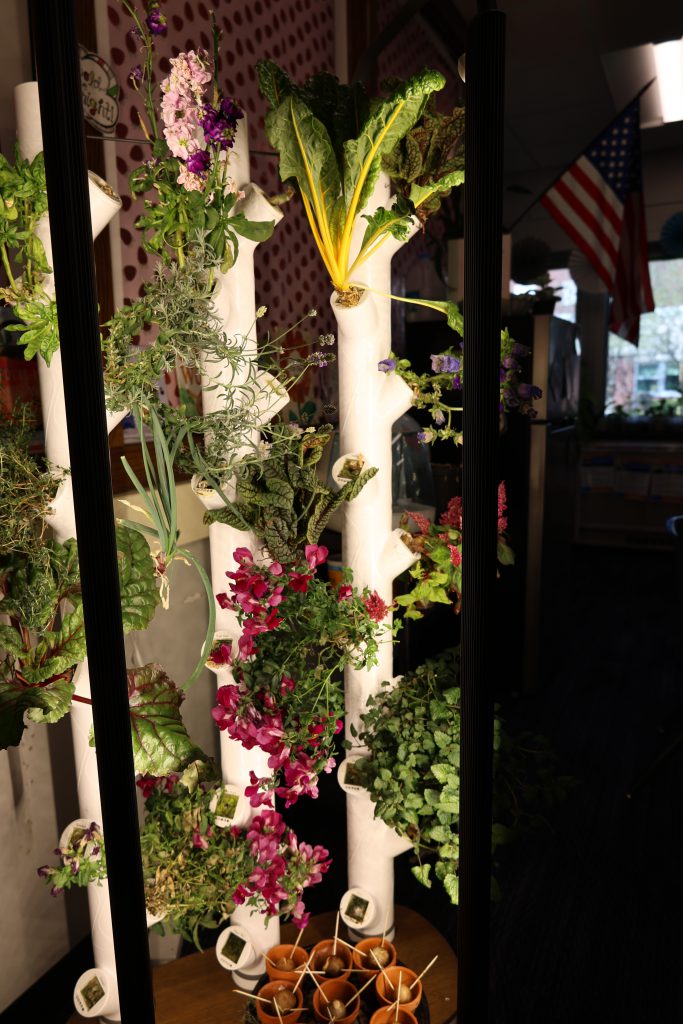
Walk through any Johnstown school, and you’re likely to spot one of the hydroponic growing towers in classrooms and common areas that have become a visible symbol of the District’s AgriQuest program.
The immersive learning experience allows students to cultivate herbs and vegetables year-round, conduct taste tests, and deepen their understanding of topics ranging from plant science to sustainability. These lessons encourage students to think critically, ask questions, and see how classroom learning applies beyond school walls.
Community collaboration and innovative partnerships
Community partnerships are a cornerstone of AgriQuest’s success, advancing food education across the District. This collective approach embodies Pilot Light’s mission to bring industry expertise into classrooms. Local chefs, businesses, and farmers engage directly with students to bridge the gap between academic lessons and everyday life. Through hands-on demonstrations, mentorship, and special events, these community leaders inspire students to discover new skills and career paths they may never have considered.
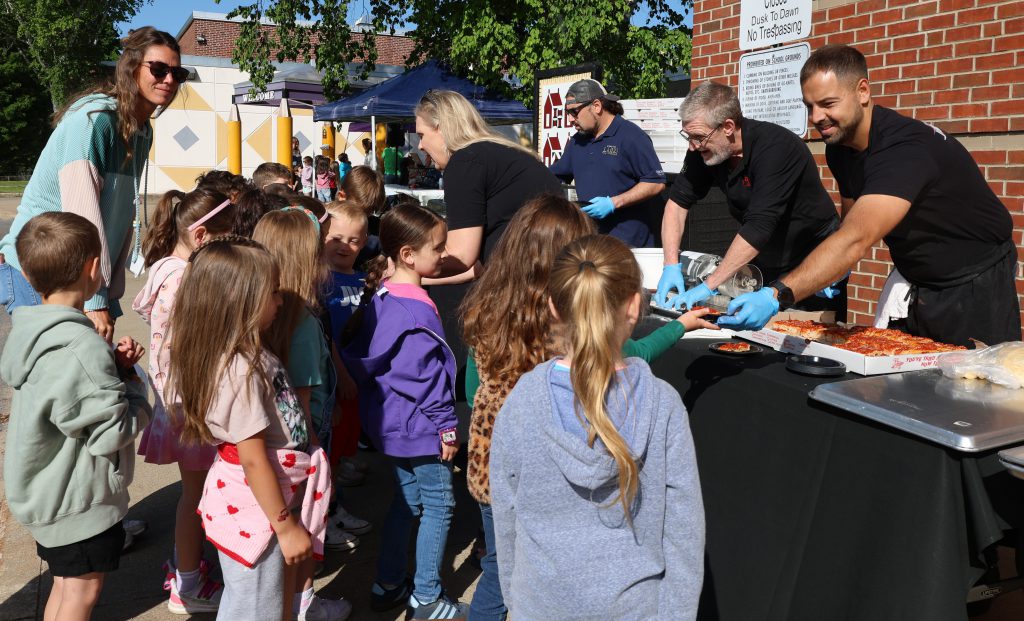
During Transportation Day at Pleasant Avenue Elementary, local organizations and businesses transformed a school event into a vibrant community celebration. Lanzi’s Food Truck hosted live cooking demonstrations and donated pizza and pasta to feed students, staff and first responders. Pop Pop’s Ice Cream Truck joined other local partners to elevate the day’s activities, creating lasting memories while deepening the bond between the school and the neighborhood.
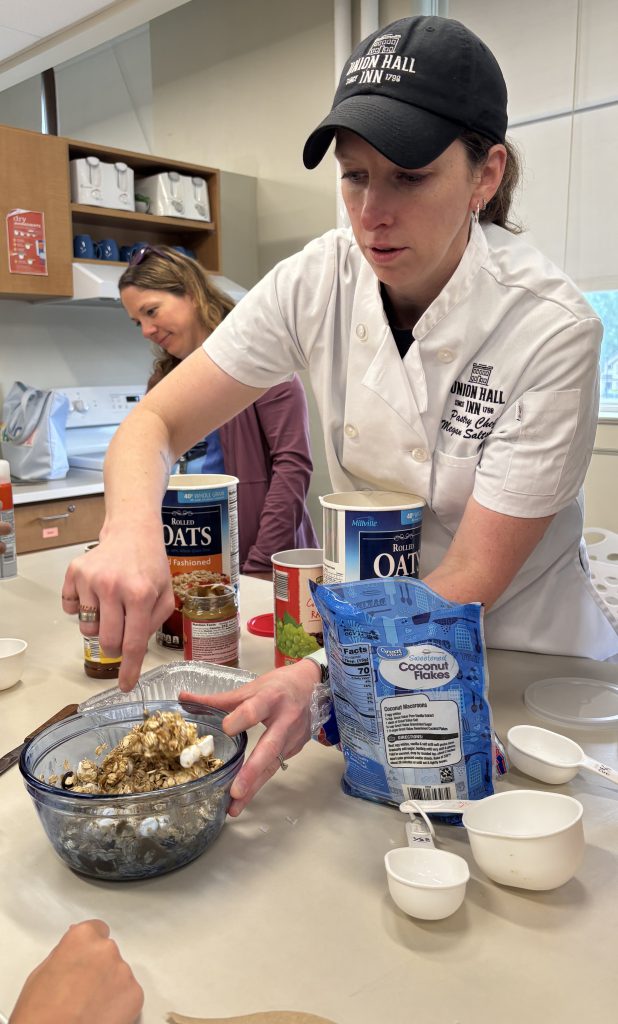
Another prime example of AgriQuest’s community-centered approach unfolded this spring at Knox Middle School. Megan Saltzman, chef at Union Hall in Johnstown, guided students in crafting nutritious granola bars using simple ingredients they could easily replicate.
For Roehl, these collaborations yield benefits that last long after individual events. “Chef demonstrations build connections between students and their food, schools and local businesses, and among neighbors,” she said.
In addition to culinary activities, retired educators, volunteers and local leaders have dedicated their time to diverse green projects ranging from planting sensory gardens to restoring nature trails. Together, these efforts cultivate a shared culture of collaboration, service and civic pride.
Bringing learning full circle in the cafeteria
Food education doesn’t stop when a special event ends or a classroom lesson concludes. Each day, students continue that learning in another important setting: the cafeteria.
For Johnstown’s Food Services Director Simone Bodman, incorporating local foods into school meals is about more than what’s on a lunch tray.
Sourcing from New York producers helps the district work toward the state’s 30% initiative, which increases reimbursements for schools hitting that local threshold, while simultaneously fueling the regional agricultural economy.
That same commitment to food education shapes her leadership outside the kitchen. Through the District’s Farm to Institution New York State (FINYS) grant, she coordinated Cornell Cooperative Extension’s Regional Roots training in scratch cooking for her cafeteria staff. She also secures regular access to fresh produce for students through a USDA-funded snack program.
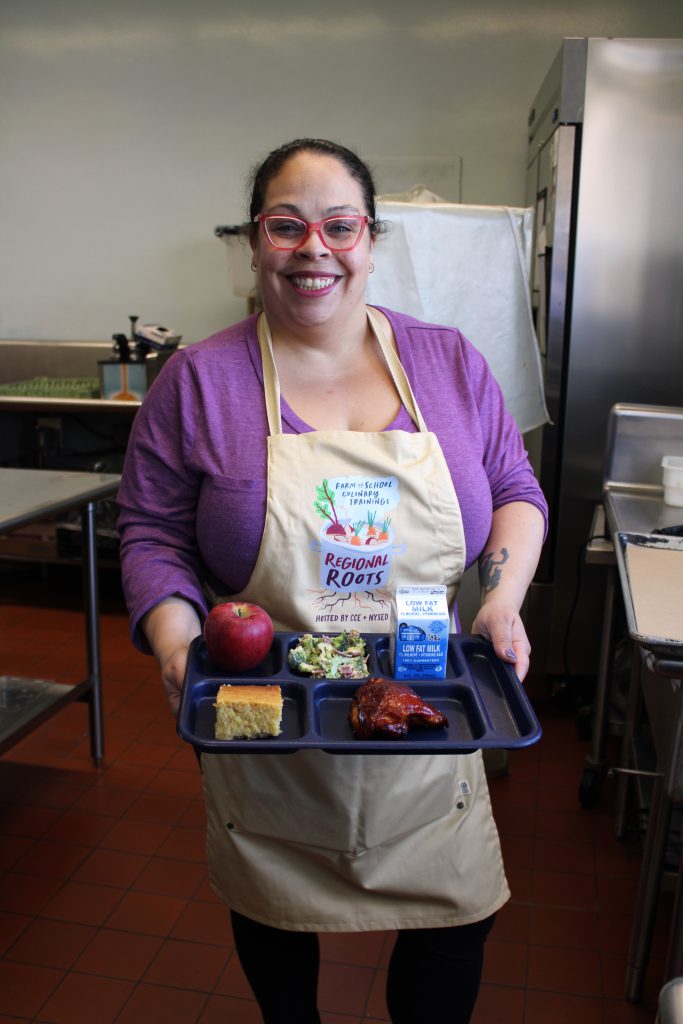
School food service professionals play a vital role in helping students explore foods. By preparing fresh recipes, answering questions and encouraging students to try unfamiliar ingredients, they help broaden student palates and introduce diverse culinary traditions.
Throughout the past school year, students expanded their horizons through a variety of international menu features, including Tajín tropical salad and Mexican street corn, Canadian poutine, Peruvian pulled pork, African-inspired sun butter stew and jollof rice, and Greek chicken gyros with tzatziki.
“Whether students are learning a recipe in class or discovering something new in the cafeteria, every experience is an opportunity to build skills, ignite their imagination and understand how food connects to agriculture, health and everyday life,” Bodman said.
Connecting AgriQuest, PBL & STEAM in 2026–2027
An exciting new chapter for Johnstown schools begins this fall as the District merges its most innovative programs under a single visionary leader. Roehl will step into a newly created, one-year role as a Teacher on Special Assignment for Performance-Based Learning (PBL) and Science, Technology, Engineering, Arts and Mathematics (STEAM), while remaining the AgriQuest Department Leader. In this multifaceted position, she will unite these initiatives to design dynamic, multidisciplinary experiences where students can apply classroom concepts and explore future careers.
“Ellen’s expanded role is an important next step in our strategy to elevate student engagement and ownership,” said Superintendent Koster. “Aligning AgriQuest, performance-based learning and STEAM, allows our educators to design relevant projects that invite students to investigate, make choices and thrive.”
This integrated curriculum reveals that agriculture spans a vast career landscape, including engineering and robotics, environmental science, food production, marketing and business.
By bringing together educators, farmers, chefs, cafeteria staff, businesses, and community organizations, the district is showing students that food is more than nourishment. It is a pathway to discovery, connection and creativity.
“AgriQuest, PBL and STEAM are not additions to our core curriculum; they are powerful ways to bring it to life,” Superintendent Koster said. “When students use reading, writing, mathematics and science to tackle authentic questions and solve real problems, they deepen their content knowledge while building essential critical-thinking, communication and collaboration skills that they will apply in future learning, careers and everyday life.”
Most importantly, these efforts cultivate the lifelong curiosity that inspires students to keep questioning, innovating and imagining the possibilities ahead.